

The Top Benefits of AWS Cloud Hosting
 shinescripts
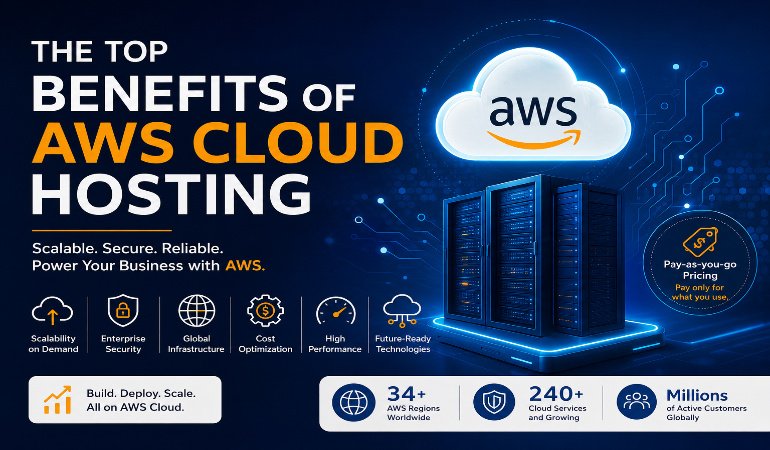
In today’s digital-first economy, businesses need a hosting platform that is fast, secure, scalable, and cost-efficient. This is why Amazon Web Services (AWS) continues to dominate the global cloud industry in 2026. From startups and eCommerce websites to enterprise-grade applications, AWS cloud hosting services provide the flexibility and performance modern businesses require.
According to recent industry reports, AWS still leads the global cloud infrastructure market with one of the largest cloud ecosystems in the world, offering more than 240 cloud services across computing, storage, AI, analytics, networking, and security.
This blog explores the top AWS Cloud Hosting Benefits, how AWS Web Hosting pricing works, and why businesses are increasingly choosing AWS cloud infrastructure for modern web hosting.
What is AWS Cloud Hosting?
AWS Cloud Hosting refers to hosting websites, applications, databases, and digital infrastructure using Amazon Web Services cloud computing platform. Unlike traditional hosting, AWS provides scalable, on-demand resources through a pay-as-you-go model.
Popular AWS cloud hosting services include:
- Amazon EC2 (Elastic Compute Cloud)
- Amazon S3 (Simple Storage Service)
- AWS Lightsail
- Amazon RDS
- AWS Lambda
- CloudFront CDN
- Elastic Beanstalk
These services allow businesses to deploy websites and applications globally with high uptime, better performance, and advanced security.
Top AWS Cloud Hosting Benefits
1. Massive Scalability for Growing Businesses
One of the biggest AWS Cloud Hosting Benefits is scalability. AWS allows businesses to scale resources up or down instantly based on traffic demand.
For example:
- An eCommerce website can handle festive traffic spikes.
- A SaaS platform can increase server capacity automatically.
- Streaming and media platforms can manage millions of concurrent users.
AWS Auto Scaling automatically adjusts infrastructure resources to maintain consistent performance at optimized costs.
This flexibility makes AWS ideal for startups, enterprises, and rapidly growing businesses.
2. Pay-As-You-Go Pricing Model
Traditional hosting providers often require fixed monthly or yearly payments, even if resources remain unused. AWS changes this with flexible consumption-based pricing.
Businesses only pay for:
- Storage used
- Compute power consumed
- Network bandwidth utilized
- Active cloud services
Modern AWS Web hosting pricing in 2026 also includes:
- Savings Plans
- Reserved Instances
- Spot Instances
- Free Tier services
According to recent AWS pricing analysis, businesses can reduce compute costs by up to 70% using Savings Plans and Reserved Instances.
This pricing structure helps companies optimize operational expenses without compromising performance.
3. Global Infrastructure and Faster Website Performance
AWS operates one of the largest cloud infrastructures globally, with multiple regions and availability zones serving customers worldwide.
Benefits include:
- Lower website latency
- Faster page loading speed
- Improved SEO performance
- Better customer experience
Using Amazon CloudFront CDN, businesses can deliver content from edge locations closest to users. This significantly improves website performance for international audiences.
For businesses running high-traffic websites or applications, AWS ensures reliable uptime and minimal downtime.
4. Enterprise-Level Security
Security remains a major concern for modern businesses, especially with increasing cyber threats and stricter compliance regulations.
AWS provides advanced cloud security features such as:
- Data encryption
- Identity and Access Management (IAM)
- DDoS protection
- Firewall management
- Automated threat detection
- Multi-factor authentication
AWS follows a shared responsibility security model where AWS secures the cloud infrastructure while customers secure their applications and data.
In 2026, AWS continues to lead in compliance certifications including:
- GDPR
- HIPAA
- SOC 2
- PCI DSS
This makes AWS a preferred web hosting service for industries like healthcare, fintech, education, and enterprise SaaS.
5. Reliability and High Availability
Website downtime can directly impact revenue and customer trust. AWS offers highly reliable cloud infrastructure with multiple availability zones and automated backup systems.
Key reliability benefits include:
- Automatic failover
- Load balancing
- Disaster recovery
- Data redundancy
- Continuous monitoring
AWS infrastructure is designed to maintain uptime even during hardware failures or traffic spikes.
This is especially important for:
- Online stores
- Banking platforms
- Media websites
- Mission-critical business applications
6. AI and Future-Ready Cloud Technologies
AWS is no longer just a hosting provider. In 2026, AWS has become a major AI cloud platform with services like:
- Amazon Bedrock
- SageMaker
- AI-powered automation
- Vector databases
- Machine learning integrations
Recent updates such as Graviton5 processors and S3 vector storage improve both AI performance and cost optimization.
Businesses using AI-powered chatbots, recommendation engines, and analytics platforms can benefit significantly from AWS cloud infrastructure.
7. Flexible Web Hosting Options
AWS Cloud Hosting Services support multiple hosting environments including:
- Shared-style hosting with Lightsail
- Dedicated cloud servers with EC2
- Serverless hosting using Lambda
- Managed application hosting with Elastic Beanstalk
This flexibility allows businesses to choose the right hosting model based on budget, technical expertise, and performance requirements.
For beginners, AWS Lightsail provides simplified cloud hosting with predictable pricing.
For enterprises, EC2 and Kubernetes-based hosting provide advanced control and customization.
8. Cost Optimization Tools
One common concern with AWS Web hosting pricing is unexpected billing. AWS now offers advanced FinOps and monitoring tools to improve cost visibility.
Useful AWS cost optimization tools include:
- AWS Cost Explorer
- AWS Budgets
- Trusted Advisor
- Auto Scaling recommendations
Industry experts note that businesses implementing proper cloud governance can significantly reduce cloud waste and overspending.
This makes AWS more financially manageable for long-term cloud adoption.
9. Excellent Developer Ecosystem
AWS offers one of the most developer-friendly ecosystems in the cloud industry.
Developers benefit from:
- API integrations
- DevOps automation
- CI/CD pipelines
- Container orchestration
- Kubernetes support
- Extensive documentation
Modern development teams can deploy applications faster while maintaining scalability and security.
This is one reason why AWS remains popular among:
- SaaS companies
- Startups
- App developers
- Enterprise software teams
AWS Web Hosting Pricing in 2026
AWS pricing depends on usage, services selected, and deployment scale.
Typical AWS hosting costs include:
| Service | Starting Cost |
|---|---|
| AWS Lightsail | Around $3.50/month |
| EC2 Instances | Pay-per-hour pricing |
| S3 Storage | Usage-based |
| CloudFront CDN | Data transfer pricing |
| RDS Databases | Depends on storage and traffic |
AWS also offers:
- 12-month Free Tier
- Always-free services
- Spot pricing discounts
- Reserved capacity discounts
However, businesses should carefully monitor:
- Data transfer charges
- Idle resources
- Backup storage
- Cross-region traffic
These hidden costs can impact overall AWS Web hosting pricing if not optimized properly.
Is AWS the Best Web Hosting Service in 2026?
For businesses seeking performance, scalability, security, and global reach, AWS remains one of the best web hosting service providers in 2026.
AWS is ideal for:
- Enterprise applications
- High-traffic websites
- AI-powered platforms
- SaaS products
- Growing startups
- Global businesses
While AWS may have a learning curve compared to traditional hosting providers, its flexibility and advanced infrastructure make it a future-ready hosting solution.
Conclusion:
The demand for cloud computing continues to rise as businesses prioritize digital transformation, AI integration, and scalable infrastructure. AWS Cloud Hosting Services provide a complete ecosystem that supports modern business growth while maintaining reliability and security.
From flexible pricing and global infrastructure to AI-ready cloud services, the AWS Cloud Hosting Benefits in 2026 make AWS one of the strongest choices for businesses of all sizes.
Whether you are launching a startup website, migrating enterprise infrastructure, or building scalable applications, AWS offers the tools and hosting power needed to stay competitive in the evolving digital landscape.
For businesses planning long-term digital growth, AWS cloud hosting remains a smart and strategic investment.